
Your Best Candidate May Be Hiding Behind a Career Break
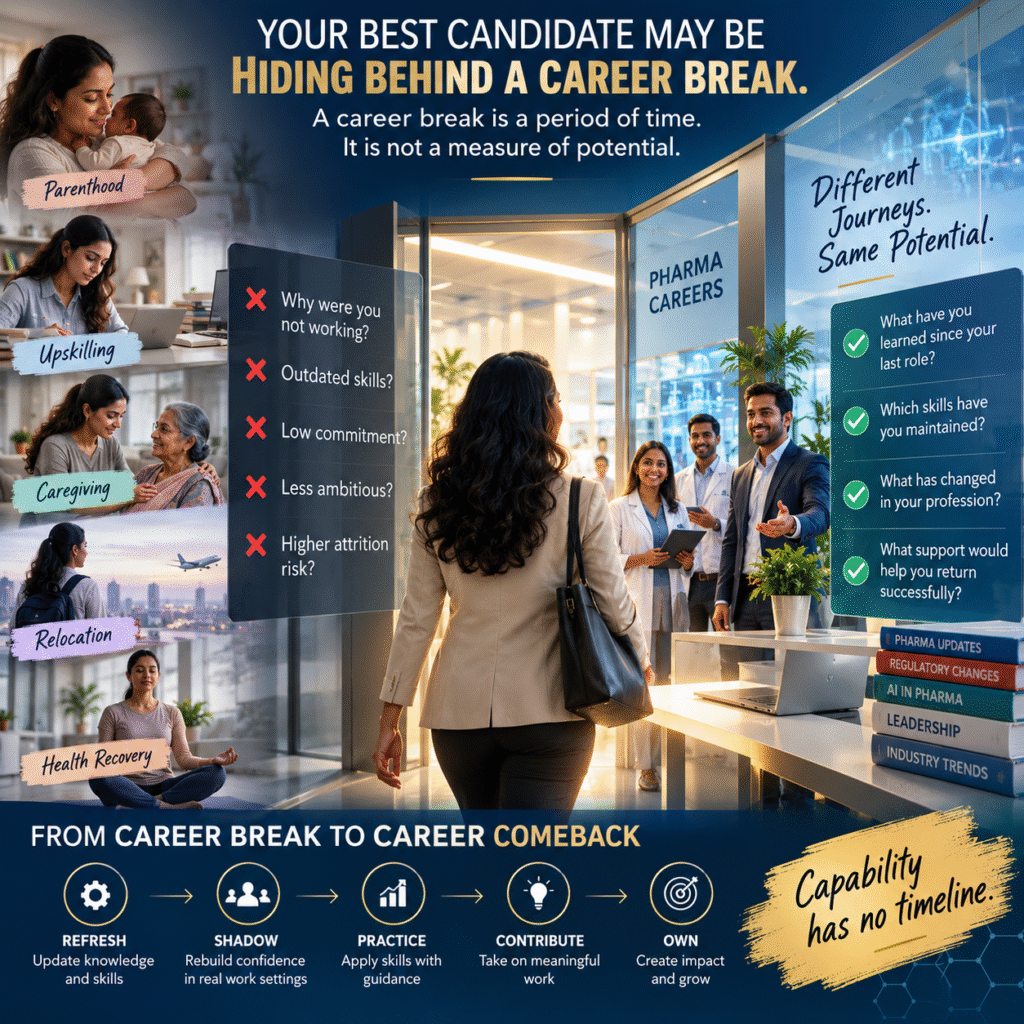
We still ask candidates to explain the gap.
Perhaps it’s time to ask employers to explain why they automatically treat the gap as a weakness.
A 6-month, 1-year or even 3-year career break can represent very different realities:
– Parenthood – Caregiving. – Upskilling. – Entrepreneurship. – Relocation. – Health recovery. – Further education. – Personal circumstances.
Yet many recruitment processes still reduce the conversation to:
“𝗪𝗵𝘆 𝘄𝗲𝗿𝗲 𝘆𝗼𝘂 𝗻𝗼𝘁 𝘄𝗼𝗿𝗸𝗶𝗻𝗴?”
The more useful question is:
“𝗪𝗵𝗮𝘁 𝗱𝗶𝗱 𝘆𝗼𝘂 𝗹𝗲𝗮𝗿𝗻, 𝗯𝘂𝗶𝗹𝗱 𝗼𝗿 𝗯𝗲𝗰𝗼𝗺𝗲 𝗰𝗮𝗽𝗮𝗯𝗹𝗲 𝗼𝗳 𝗱𝘂𝗿𝗶𝗻𝗴 𝘁𝗵𝗮𝘁 𝗽𝗲𝗿𝗶𝗼𝗱?”
For an industry like pharmaceuticals—where experienced talent, scientific expertise, regulatory knowledge, quality discipline and commercial relationships can take years to develop—automatically filtering out career-returning professionals can be an expensive talent mistake.
𝗪𝗵𝗮𝘁 𝘀𝗵𝗼𝘂𝗹𝗱 𝗛𝗥 𝗿𝗲𝘁𝗵𝗶𝗻𝗸?
1. 𝗦𝗲𝗽𝗮𝗿𝗮𝘁𝗲 “𝗰𝗮𝗿𝗲𝗲𝗿 𝗴𝗮𝗽” 𝗳𝗿𝗼𝗺 “𝗰𝗮𝗽𝗮𝗯𝗶𝗹𝗶𝘁𝘆 𝗴𝗮𝗽”
Someone can have a gap in employment without having a gap in capability.
A regulatory professional who spent two years away from full-time work may still retain deep domain knowledge.
The question is whether their skills are current and applicable.
2. 𝗥𝗲𝗽𝗹𝗮𝗰𝗲 𝗴𝗮𝗽 𝗾𝘂𝗲𝘀𝘁𝗶𝗼𝗻𝘀 𝘄𝗶𝘁𝗵 𝗰𝗮𝗽𝗮𝗯𝗶𝗹𝗶𝘁𝘆 𝗾𝘂𝗲𝘀𝘁𝗶𝗼𝗻𝘀
Instead of: “Why did you leave your career?”
Explore:
– “What have you learned since your last role?”
– “Which skills have you maintained?”
– “What has changed in your profession?”
– “What support would help you return successfully?”
That creates a much better candidate conversation.
3. 𝗖𝗿𝗲𝗮𝘁𝗲 𝗿𝗲𝘁𝘂𝗿𝗻𝘀𝗵𝗶𝗽 𝗽𝗮𝘁𝗵𝘄𝗮𝘆𝘀
Don’t expect someone returning after a career break to immediately operate at 100% capacity on Day 1.
Build a structured transition:
Refresh → Shadow → Practice → Contribute → Own
A 60–90 day returnship can provide the bridge between previous experience and current workplace expectations.
4. 𝗗𝗼𝗻’𝘁 𝗰𝗼𝗻𝗳𝘂𝘀𝗲 𝗿𝗲𝗰𝗲𝗻𝗰𝘆 𝘄𝗶𝘁𝗵 𝗿𝗲𝗹𝗲𝘃𝗮𝗻𝗰𝗲
A candidate may have worked continuously for 10 years.
Another may have worked 7 years, taken a 2-year break and then spent 1 year reskilling.
Which one is more relevant?
The answer shouldn’t be determined by the CV timeline alone. Assess demonstrated capability.
5. 𝗧𝗿𝗮𝗶𝗻 𝗿𝗲𝗰𝗿𝘂𝗶𝘁𝗲𝗿𝘀 𝗮𝗻𝗱 𝗵𝗶𝗿𝗶𝗻𝗴 𝗺𝗮𝗻𝗮𝗴𝗲𝗿𝘀
Even the best inclusive hiring policy fails if interviewers unconsciously interpret career breaks as:
Low commitment. Low ambition. Outdated skills. High attrition risk.
Recruitment teams need structured interview frameworks that evaluate evidence, not assumptions.
A career break is a period of time. It is not automatically a measure of potential.
The future of talent acquisition will increasingly require organizations to look beyond linear careers and recognize that valuable talent doesn’t always follow:
College → Job → Promotion → Promotion → Retirement
Careers are becoming more non-linear, modular and personal.
And organizations that learn to evaluate capability rather than chronology will have access to a much larger talent pool.